
Limo Hire Guides & Advice
How to Hire a Limo in London: A Practical Booking Guide
Hiring a limousine should be one of the enjoyable parts of planning your occasion. The best bookings start with a little more than choosing the vehicle that looks best in a photograph: passenger numbers, timings, access, journey type, licensing and the details written into your quote all matter.
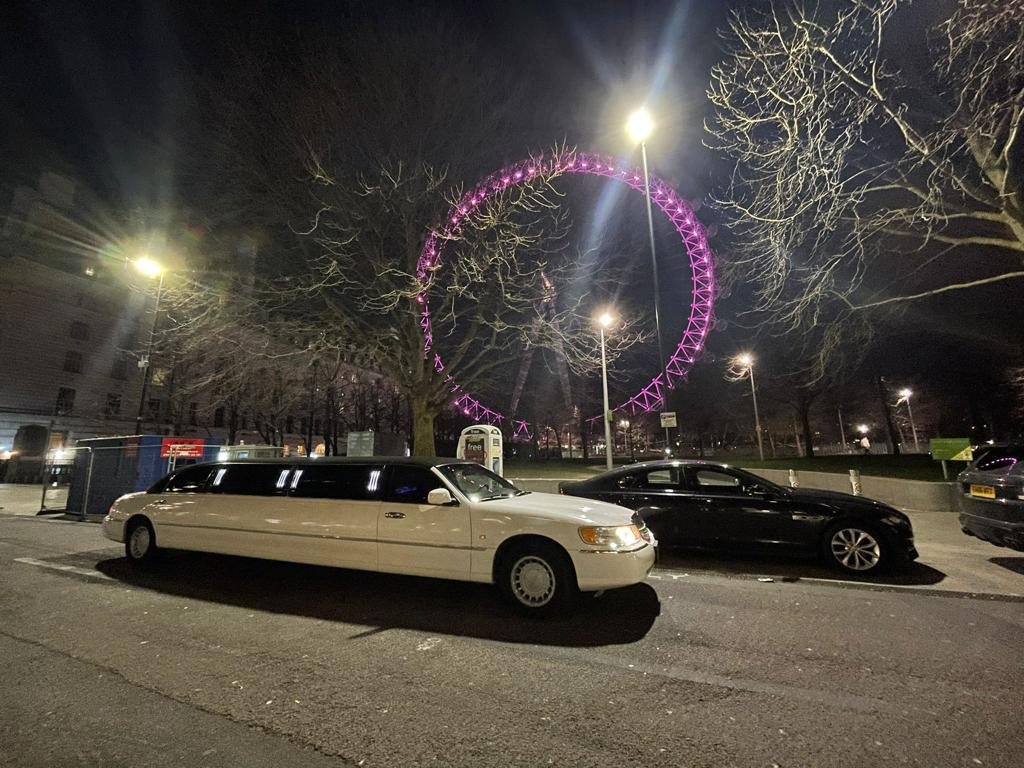
Whether you are arranging transport for a wedding, prom, birthday, hen party, night out, airport journey or corporate event, the goal is simple: the right vehicle should arrive at the right place, at the right time, with enough suitable space for the people and plans you have booked it for.
This guide takes you through the process from the first enquiry to the day of hire. It also covers details that are particularly important in London, where traffic, event restrictions, narrow streets and suitable stopping points can matter just as much as mileage.
If you already know your date, passenger numbers and journey, you can go straight to our London limo hire service and request a quote. If you are still deciding what to book or what information you need, this guide is designed to help.
Hiring a Limo: The Booking Process at a Glance
-
1
Plan the journey
Know your date, passenger number, collection point, destination, required arrival time and important stops.
-
2
Match the vehicle
Choose around permitted capacity, luggage, occasion, passenger comfort and access as well as appearance.
-
3
Check the quote
Make sure the price covers the journey you actually want, including stops, waiting and the return where applicable.
-
4
Confirm in writing
Complete the required payment step and keep written confirmation of the vehicle, itinerary, timings and price.
1. Start With the Details That Actually Shape the Booking
It is tempting to begin by asking how much a limo costs for a particular Saturday. The difficulty is that there is no single Saturday limo price. A useful quotation depends on what the vehicle actually needs to do.
You do not need a perfect itinerary before making an enquiry, but a few accurate details make it much easier to establish availability, recommend a suitable vehicle and provide a meaningful price.
| Detail | Why it matters |
|---|---|
| Date | Availability can be very different on an ordinary weekday, a summer Saturday, a popular prom date, Christmas, New Year or a major event day. |
| Passenger number | This determines which vehicles can legally and practically accommodate the group. |
| Collection point | The pickup location affects distance, timing and whether a large stretch vehicle can safely reach or stop near the address. |
| Destination | A hotel, school, wedding venue, airport, restaurant or stadium can each require different arrival and collection planning. |
| Required arrival time | This is often more useful than a preferred pickup time because the journey can be planned backwards from when you genuinely need to arrive. |
| Additional stops | Passenger collections, photo stops and extra drop-offs can change both the route and the time required. |
| Return plans | Knowing whether you need one-way, return or extended hire helps determine the correct quotation. |
| Luggage or access requirements | A vehicle may have enough seats for the group without having enough practical room for several suitcases or particular mobility requirements. |
The more complicated the journey, the more important it is to provide the full plan at quotation stage. Three separate passenger collections followed by a photo stop and a timed restaurant reservation is a very different booking from a direct journey between two addresses, even if the mileage is similar.
2. Choose the Vehicle for the Journey, Not Just the Photograph
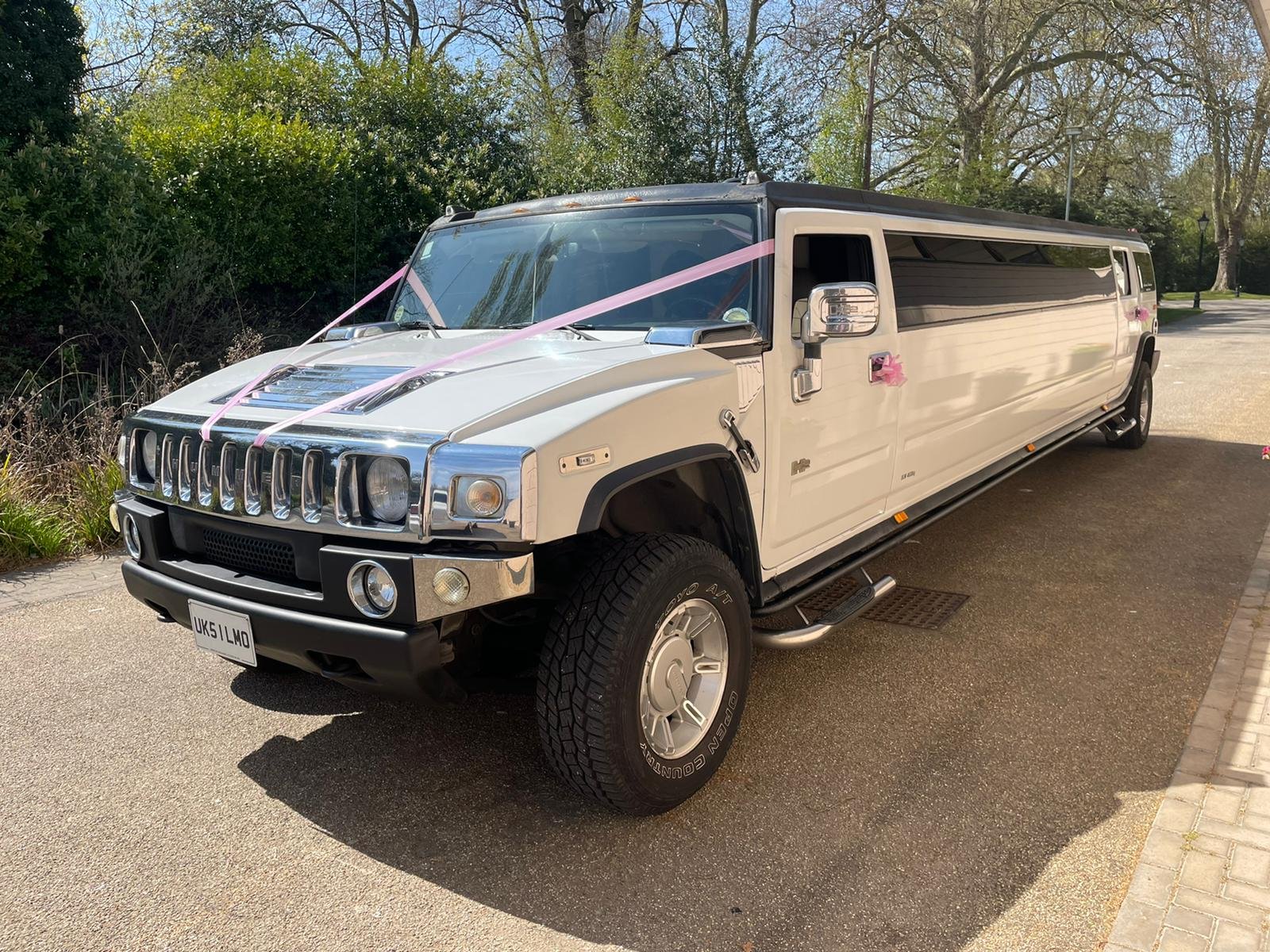
The vehicle is naturally one of the most enjoyable parts of choosing a limousine. A classic Lincoln gives a very different impression from a Hummer, Chrysler, large SUV limousine, pink limo or party bus.
Style matters, but it should come after the practical questions.
Start with the confirmed passenger capacity
Tell the booking company exactly how many people are travelling. Do not choose a vehicle because the interior looks large enough or because you have seen a similar model advertised elsewhere with a particular number of seats.
The important figure is the permitted passenger capacity of the specific vehicle being offered for your journey.
If your group size might change, say so before booking. Moving from eight passengers to nine, for example, can be much more significant than simply finding one more place to sit because different licensing requirements can apply to larger passenger vehicles.
Match the vehicle to the occasion
Different vehicles suit different types of booking. A large Hummer or party-style vehicle may be exactly what a birthday, hen party or prom group wants. A wedding party may prefer a white Lincoln or Chrysler for a more formal appearance. Corporate customers may care more about comfort, discreet presentation and straightforward access.
There is no single limousine that is best for every customer. The more useful question is which vehicle suits your group, event, route and expectations.
You can compare our current limousine and chauffeur-driven fleet by vehicle type and passenger capacity before requesting a quote.
Allow for luggage, clothing and usable space
A passenger-capacity figure does not automatically tell you how much luggage will fit. Stretch limousines are primarily designed around passenger accommodation, and luggage space can be more restricted than people expect.
This is especially important for:
- airport transfers involving several suitcases;
- weddings where passengers may be wearing large dresses or formal clothing;
- groups carrying gifts, event materials or equipment;
- longer journeys where passengers would benefit from more personal space.
If luggage is involved, give the number and approximate size of the bags when you enquire. For some airport journeys, a vehicle may need to operate below its maximum passenger capacity simply to provide suitable room for luggage.
Tell the company about mobility and access requirements
Stretch vehicles can have very different door openings, step heights, floor levels and seating layouts. A limousine that appears spacious in photographs may not necessarily be the easiest vehicle for every passenger to enter or leave.
If anyone in the group has reduced mobility or another access requirement, mention it before choosing the vehicle. That gives the booking team an opportunity to discuss whether a particular model is appropriate rather than discovering an access problem at the collection point.
If children are travelling, discuss the arrangements before booking
Include children when you state who will be travelling and give their ages. Child-seat rules can depend on the type of licensed vehicle and the circumstances of the journey, so do not assume that the arrangements will be identical to those in your own car.
For licensed taxis and minicabs, GOV.UK sets out specific circumstances in which children may travel without the usual child seat if the driver does not provide the correct restraint. The sensible approach when arranging a planned limousine journey with children is to discuss the arrangements in advance. You can read the current GOV.UK guidance on child seats in taxis and private-hire vehicles.
3. Plan the London Journey Around the Event, Not an Ideal Traffic Time
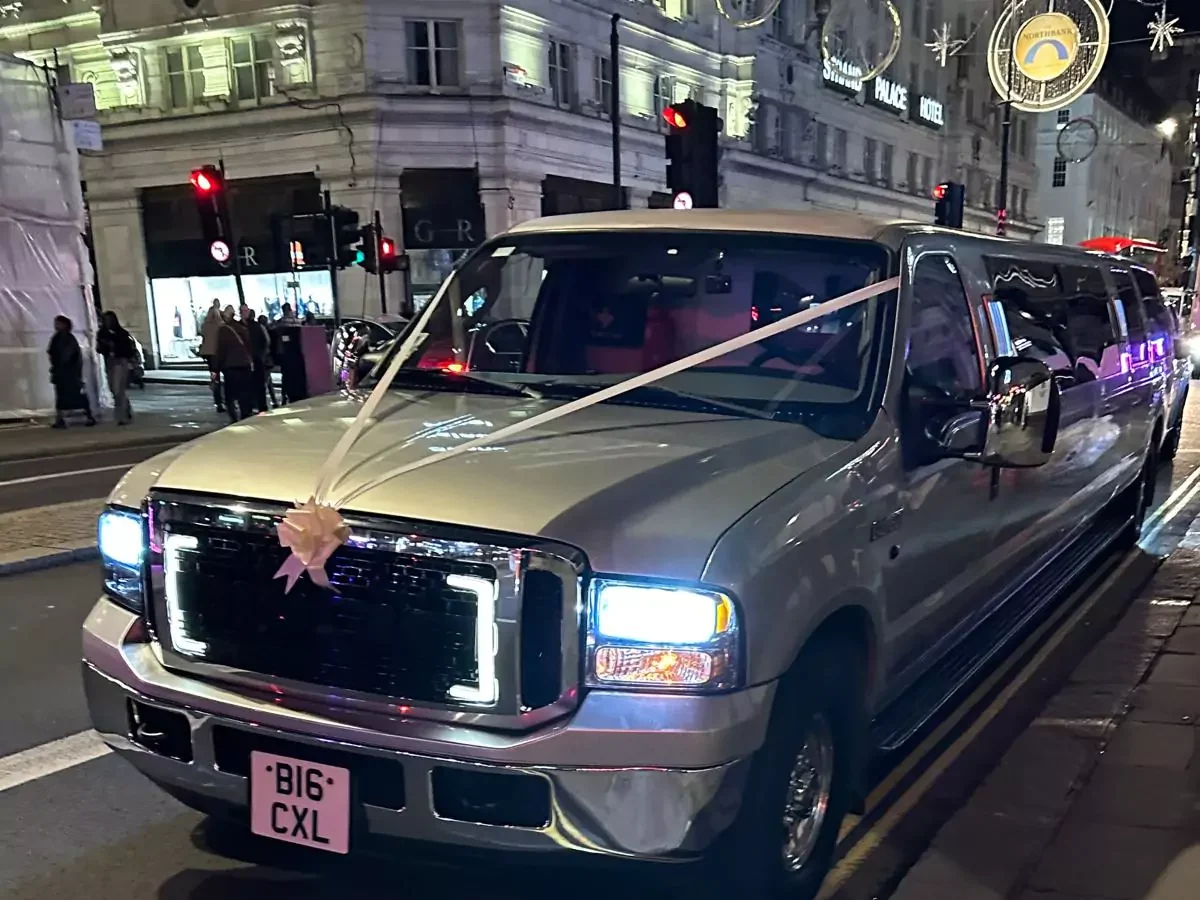
London makes itinerary planning particularly important. A route that looks straightforward on a map can be affected by congestion, roadworks, event traffic, temporary restrictions, security arrangements, loading controls and the practical question of where a long vehicle can safely stop.
The aim is not to predict London traffic perfectly. No transport company can do that. The aim is to build enough realism into the booking that an ordinary delay does not spoil the reason you hired the vehicle.
Work backwards from the time you must arrive
If a prom begins at 7pm, a wedding ceremony starts at 1pm or a restaurant will only hold the table until 8:15pm, tell the booking team that fixed time.
Planning the collection around the required arrival time is usually more useful than choosing a pickup time first and hoping it leaves enough margin.
Be realistic about multiple pickups
Collecting twelve passengers from one address is very different from collecting three people from four different homes.
Every additional collection can involve:
- extra driving;
- finding a safe and suitable place to stop;
- waiting for passengers to come outside;
- boarding time;
- traffic between addresses;
- additional time for photographs.
If several passengers live near one another, one agreed meeting point can sometimes produce a simpler and more relaxed journey. It is not appropriate for every booking, but it is worth considering when arrival time matters.
Tell the company about photo stops before the day
A limousine often becomes part of the photographs, especially for weddings, proms, birthdays and milestone celebrations. If you want time for photographs, build it into the itinerary rather than trying to add it after the chauffeur arrives.
The location also matters. A famous London landmark may look perfect in photographs but offer very little suitable space for a stretch limousine to stop and wait.
Door-to-door does not always mean the exact front door
A long limousine cannot safely or lawfully stop everywhere a normal car can. Narrow streets, restricted entrances, pedestrianised areas, hotel forecourts, school gates, security-controlled venues and heavily regulated central London roads can all affect the final pickup or set-down point.
If a particular entrance matters, tell the booking team in advance. Agreeing a suitable nearby collection point beforehand is much better than discovering on the day that the vehicle cannot use the place you expected.
Give the right information for the type of pickup
| Pickup or destination | Useful information to provide |
|---|---|
| Home or residential address | Full address, postcode, how many passengers are boarding there and anything unusual about access, gates, narrow roads or parking restrictions. |
| Hotel | Hotel name, full address and, where known, the entrance or chauffeur/private-hire collection point the hotel expects vehicles to use. |
| Airport | Airport, terminal, flight number, expected arrival or departure time, passenger count and realistic luggage requirements. |
| Arena, stadium or concert venue | Event name, required arrival time and any private-hire, coach or collection instructions issued by the venue. |
| Prom or school event | Exact venue entrance, requested arrival time, passenger meeting point and whether time is required beforehand for photographs. |
| Wedding venue | Ceremony time, correct entrance, passenger group, photography requirements and whether the same vehicle is required for onward travel. |
4. Compare the Complete Quote, Not Just the Headline Price
Two limousine quotations are only comparable if they cover broadly the same journey.
A lower-looking price may be based on a shorter hire period, fewer passenger collections, no waiting time, a different vehicle or no return journey. Before deciding that one quote is cheaper than another, check what has actually been priced.
What commonly affects limo hire pricing?
- the vehicle selected;
- the date and time;
- journey distance;
- total hire duration;
- number of passenger collections and drop-offs;
- waiting time;
- one-way or return travel;
- airport, parking or venue-related charges where applicable;
- special requests;
- peak demand on particular dates.
That is why a single hourly figure does not always tell you what the finished booking will cost.
Our London limo hire price guide shows current starting prices and examples, but your final quotation should be based on the vehicle and complete journey you actually request.
Ask what the quoted price includes
Before paying, check that you understand whether the quotation includes:
- the agreed outward journey;
- all listed passenger collections;
- the return journey, where required;
- the agreed hire period;
- waiting time;
- planned photo stops;
- airport or parking charges where relevant;
- any requested decorations or extras;
- the payment required to secure the booking;
- the deadline for the remaining balance.
If something is unclear, ask before making payment. A useful quotation should make the booking easier to understand, not leave you guessing about what happens on the day.
Do not assume every feature in a gallery is included
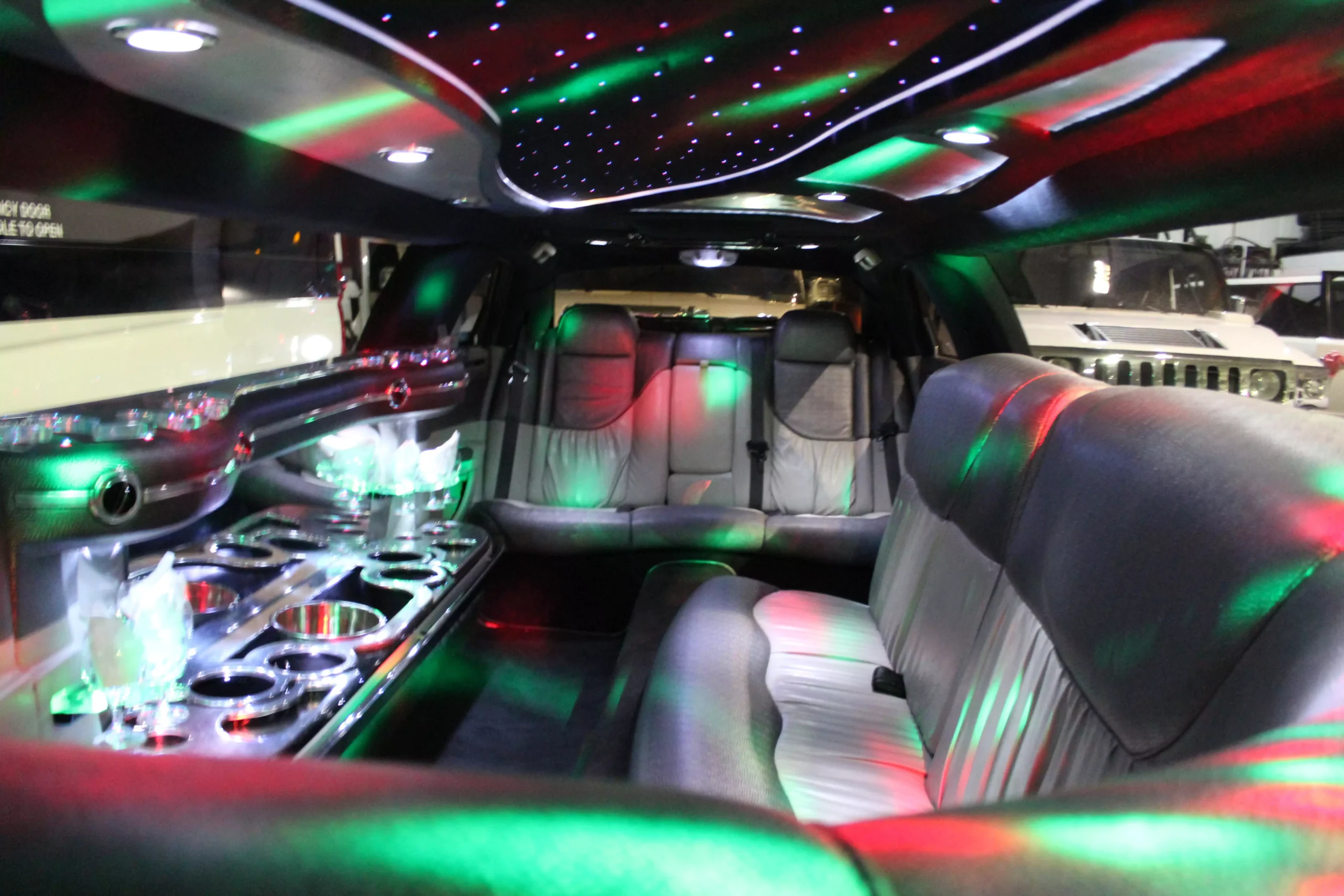
Interior features vary between vehicles. Lighting, music connectivity, entertainment systems, refreshments, decorations and other amenities should be confirmed if they are important to your booking.
The same applies to colour and model. If you specifically want a white Hummer, pink limousine or particular Chrysler rather than simply a suitable limousine of that type, make that clear when obtaining the quote and check how it is described in the written confirmation.
5. Check Licensing and Safety Before You Pay
A stretch limousine may look very different from an ordinary private-hire vehicle, but carrying paying passengers still brings legal and licensing requirements.
According to current GOV.UK limousine licensing guidance, small limousines with up to eight passenger seats generally require the appropriate private-hire licensing when being supplied with a driver. Larger limousines with nine or more passenger seats fall under public service vehicle operator licensing. The exact requirements depend on the vehicle and how the service is being operated.
There are specific exceptions and additional rules in some circumstances, which is why it is better to check the relevant licensing arrangement rather than assuming every stretch vehicle is regulated in exactly the same way.
You can read the official GOV.UK limousine licensing guidance. For London private-hire drivers, vehicles and operators, Transport for London also provides a public private-hire licence checker.
What is worth checking as a customer?
- The service is being supplied under the appropriate licensing arrangement for the vehicle and type of hire.
- The specific vehicle is suitable for the number of passengers travelling.
- The company can explain the relevant licensing arrangement if you are booking a larger limousine.
- The vehicle capacity being quoted is the capacity that applies to the vehicle being supplied.
- You receive genuine booking documentation showing what has been agreed.
Do not treat social-media photographs, luxury features or a very low price as substitutes for these checks. They tell you very little about whether the underlying passenger transport arrangements are appropriate.
6. Know the Difference Between an Enquiry, a Quote and a Confirmed Booking
Finding an available limousine and receiving a price does not necessarily reserve the vehicle.
With our booking process, a deposit or booking payment is normally required to secure the vehicle and date. Until the required payment has been received, the vehicle may remain available to other customers. The booking is confirmed once the required payment has been received and written confirmation has been issued.
Your written confirmation should allow you to identify the important details of the agreement, including:
- the date of hire;
- the vehicle or agreed vehicle type;
- the collection location;
- the collection time;
- the destination;
- important additional stops;
- the agreed price;
- payment arrangements;
- the principal terms applying to the booking.
Check those details as soon as you receive them. Do not wait until the morning of the event to notice that a postcode, pickup time or return collection has been recorded incorrectly.
Our limo hire FAQs explain the booking process in more detail, while our terms and conditions set out the contractual terms that apply to bookings made with us.
If an exact vehicle is important, check the confirmation
If your occasion depends on a particular model, colour or style, make that clear before payment and check how it appears in the booking documents.
Like other vehicle-hire services, circumstances such as breakdowns or unexpected vehicle issues can sometimes require a replacement. Read the substitution terms so you understand what would happen if the originally designated vehicle became unavailable.
Read cancellation and amendment terms before paying
Special-event transport is reserved for a specific date and time, so cancellation and amendment rules matter.
Before confirming, make sure you understand what happens if you need to:
- cancel the booking;
- change the date;
- move the collection time;
- change the route;
- add another passenger collection;
- change the vehicle;
- increase the passenger number;
- extend the hire period.
If your plans change after the booking has been confirmed, contact the booking team as early as possible rather than assuming the chauffeur can accommodate the change when the vehicle arrives.
7. Check the Details Again Before the Day of Hire
A few minutes spent reviewing the booking can prevent a surprising number of avoidable problems.
Before the journey, check:
- the collection date and time;
- the complete collection address and postcode;
- the destination and correct venue entrance;
- the final passenger number;
- all planned additional stops;
- the time you must arrive;
- whether luggage requirements have changed;
- the return collection time, where applicable;
- that required payments have been completed by the agreed deadline;
- that the lead passenger’s mobile number is correct.
Give one person responsibility for the booking
For group journeys, it is usually much easier if one person acts as the main contact for the booking team and chauffeur.
That person should know the agreed itinerary, have the confirmation available and be contactable on the day. Twelve passengers independently giving different instructions rarely makes the journey simpler.
Be ready at the agreed collection time
Time allowed for London traffic is not the same as unlimited waiting time at the pickup.
For proms, airport journeys and other time-sensitive bookings, encourage the group to be together before the vehicle arrives. If photographs are planned at the collection point, make sure the booking allows time for them.
8. Common Mistakes to Avoid When Hiring a Limo
Choosing by price alone
Price is important, but a cheap figure is only useful if the vehicle, itinerary, passenger capacity and terms behind it suit the booking. Compare like with like.
Underestimating the passenger number
Do not book an eight-passenger vehicle and assume a ninth person can simply be added later. Finalise the group as accurately as possible and tell the booking company if numbers change.
Forgetting about luggage
This is particularly common with airport bookings. A passenger-capacity figure should never automatically be treated as a luggage-capacity figure.
Planning too many pickups too close together
A map may show that several addresses are only a few minutes apart, but stopping, boarding and London traffic all add time. Build the itinerary around the arrival you need to achieve.
Leaving photo stops until the day
If photographs are part of the experience, include them in the plan. The chauffeur then knows that extra time and an appropriate stopping place are required.
Assuming the quote has reserved the vehicle
Availability can change. Complete the required booking payment and make sure written confirmation has been issued before treating the reservation as secured.
Assuming every limousine has the same features
Interiors, entertainment systems, luggage space, lighting and other features vary. Confirm anything that is particularly important to your event rather than relying on a photograph from another vehicle.
Not checking what happens if the event overruns
Weddings can run late, restaurants can take longer than expected and groups do not always leave venues on time. Check how additional hire time is handled before the day rather than discovering it after the agreed period has finished.
Frequently Asked Booking Questions
How far in advance should I hire a limo?
Book as soon as the important details of your event are known if you need a particular model, colour or passenger capacity. Availability is usually tighter around prom season, summer wedding weekends, Christmas, New Year, major London events and popular Saturdays. Short-notice bookings can still be possible, but the vehicle choice will depend on what remains available.
What information do I need for an accurate limo quote?
The most useful starting information is your date, passenger number, collection address or postcode, destination, required arrival time, return requirements and every known additional pickup or stop. Also mention your preferred vehicle, occasion, luggage and any access requirements.
Can a limo collect passengers from more than one address?
Yes, multiple passenger collections can normally be included in the itinerary. Give every address in the preferred collection order when requesting the quote because additional stops affect the route and time required. If several passengers live close together, one meeting point may make the journey simpler.
Should I book one-way, return or hourly hire?
It depends on the itinerary. A direct journey to an event may suit one-way hire. A prom, concert or evening out may need a return collection. A booking involving several venues, passenger pickups, photography or waiting time may be better planned around a longer period of hire. Describe the whole journey rather than trying to choose the pricing format yourself.
How many passengers can travel in a limousine?
It depends on the permitted capacity of the specific vehicle. Our current fleet includes different vehicle sizes, from smaller stretch limousines to larger Hummer, Ford Excursion and party-vehicle options. Always book according to the confirmed capacity of the actual vehicle being offered rather than the capacity of a similar-looking model.
Is the exact limousine shown in a photograph guaranteed?
Check your quotation and confirmation. If a particular model, colour or vehicle is essential, make that clear before payment and check how it is described in your written documents. You should also read the terms covering vehicle substitution if the designated vehicle becomes unavailable unexpectedly.
What if the number of passengers changes?
Tell the booking team as soon as possible. Reducing the group may not affect vehicle suitability, but increasing it can mean the booked limousine is no longer appropriate. Do not wait until the day to ask the chauffeur to carry an additional passenger.
Can we make an extra stop on the day?
Possibly, but it should not be assumed. An unplanned stop can affect the route, mileage, arrival time, agreed hire period and any bookings the vehicle has afterwards. If you know about a stop in advance, include it before the booking is confirmed.
Can we bring luggage in a stretch limo?
Yes where the selected vehicle has suitable room, but luggage capacity varies considerably and can be limited in some stretch limousines. Give the number and approximate size of the bags when requesting a quote, especially for airport journeys.
What should I receive after booking?
You should receive written confirmation covering the important details of the booking, including the date, vehicle or vehicle type, journey, timings, agreed price and payment arrangements. Check it when it arrives and contact the booking team promptly if anything is incorrect.
One-minute final check
Before You Pay, Can You Answer These Questions?
- Exactly how many passengers are travelling?
- Which vehicle or vehicle type is being supplied?
- What is the permitted passenger capacity of that vehicle?
- Does the quotation include the complete itinerary you requested?
- Are all pickups, waiting periods, photo stops and returns included?
- Have you mentioned luggage, children and access requirements?
- Do you know what payment secures the reservation?
- Have you read the cancellation, amendment and replacement terms?
- Will you receive written confirmation once the booking is secured?
Hiring a Limo Should Feel Simple Once the Important Details Are Right
A good limousine booking is not complicated because it has dozens of rules. It becomes straightforward because the important details have been discussed before the day arrives.
Start with the people travelling and the event you are planning. Choose a vehicle that genuinely suits the group, provide a realistic itinerary, understand what your quote includes and keep the confirmed arrangements in writing.
If you are uncertain about the vehicle, timing, luggage, access or type of hire, ask while arranging the journey. It is much easier to improve the plan before the booking is finalised than when a fully loaded limousine is already waiting outside.